Cherry Rain Cover Buyer Guide
Cherry rain cover is used to protect cherries from direct rainfall during sensitive periods before harvest. The goal is to reduce rain contact on fruit, lower cracking risk and keep the orchard workable while still allowing enough light and ventilation.
For importers and growers, the best rain cover is not only a transparent sheet. Width, reinforcement, seam quality, UV life, installation method and packing all matter.
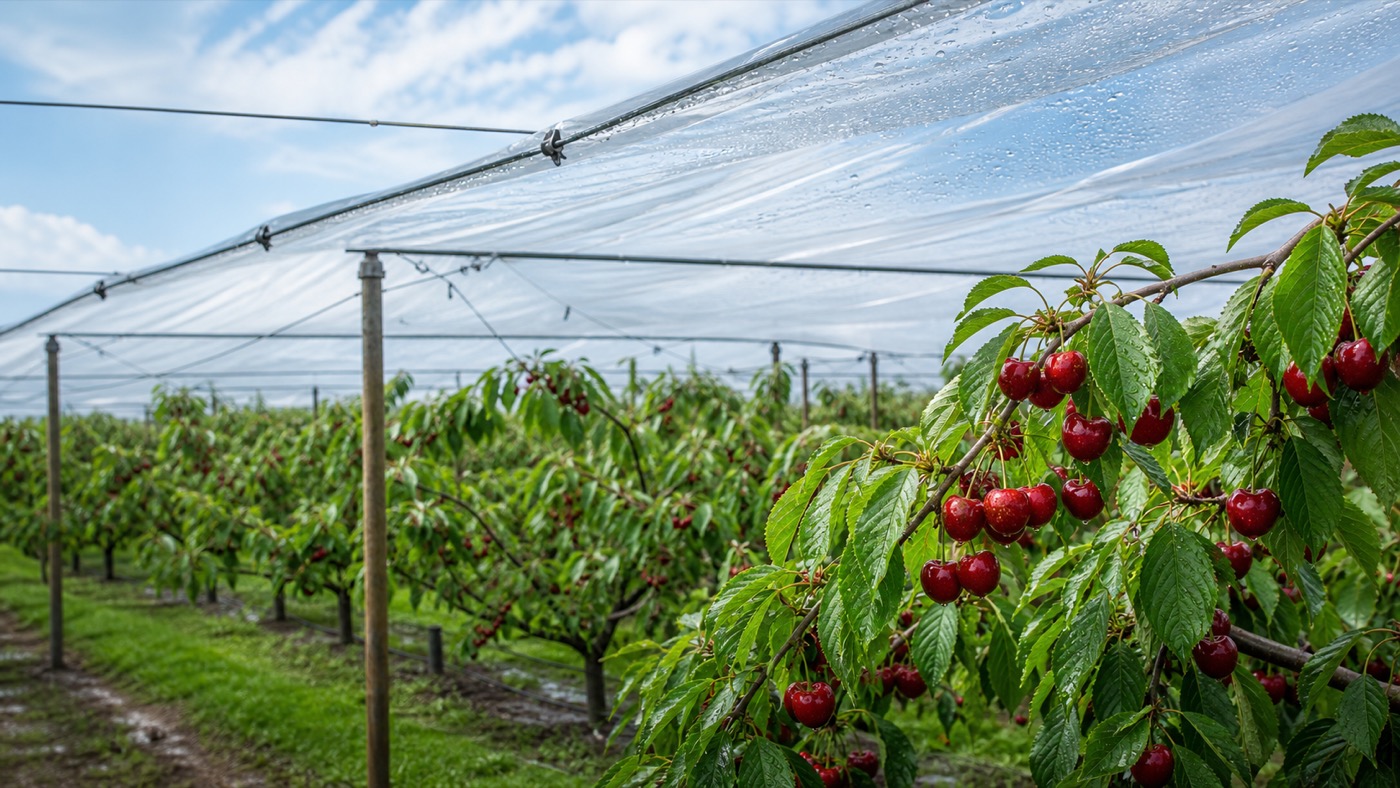
What cherry rain cover does
A rain cover sheds rainfall away from the fruiting zone. It does not control every cracking factor, because variety, fruit maturity, irrigation, humidity and weather also matter. But it can be an important part of risk reduction in commercial cherry orchards.
Important specifications
Buyers should confirm material, finished width, thickness or fabric weight, reinforcement, eyelets or fixing method, UV stabilization, light transmission and roll packing.
Installation questions
How wide is the tree row? What is the support structure? Will the cover stay for the full season or only during risk periods? How will wind load be managed? These answers affect the correct product design.
Buyer checklist
| Buyer item | What to confirm |
|---|---|
| Width | Match row spacing and support structure. |
| UV life | Suitable for outdoor orchard exposure. |
| Seams and edges | Strong enough for tension and wind. |
| Transparency | Enough light for orchard management. |
| Packing | Roll length and weight suitable for installation teams. |
Need a factory sample?
Send orchard row spacing, support structure, required width and target season. We can discuss a cherry rain cover specification.
View related productFAQ
Does rain cover completely prevent cherry cracking?
No. It reduces direct rain contact, but cracking also depends on variety, maturity, irrigation and weather.
Can cherry rain cover be customized?
Yes. Width, length, reinforcement, eyelets and packing can be discussed according to the orchard structure.