Ground Cover for Commercial Nurseries
Commercial nurseries use woven ground cover to keep container areas clean, suppress weeds and create a stable working surface. Unlike seasonal crop rows, nursery ground cover may stay exposed for long periods and receive regular foot traffic, carts and irrigation.
This means buyers should pay close attention to GSM, UV stabilization, weave density, roll width and edge quality.
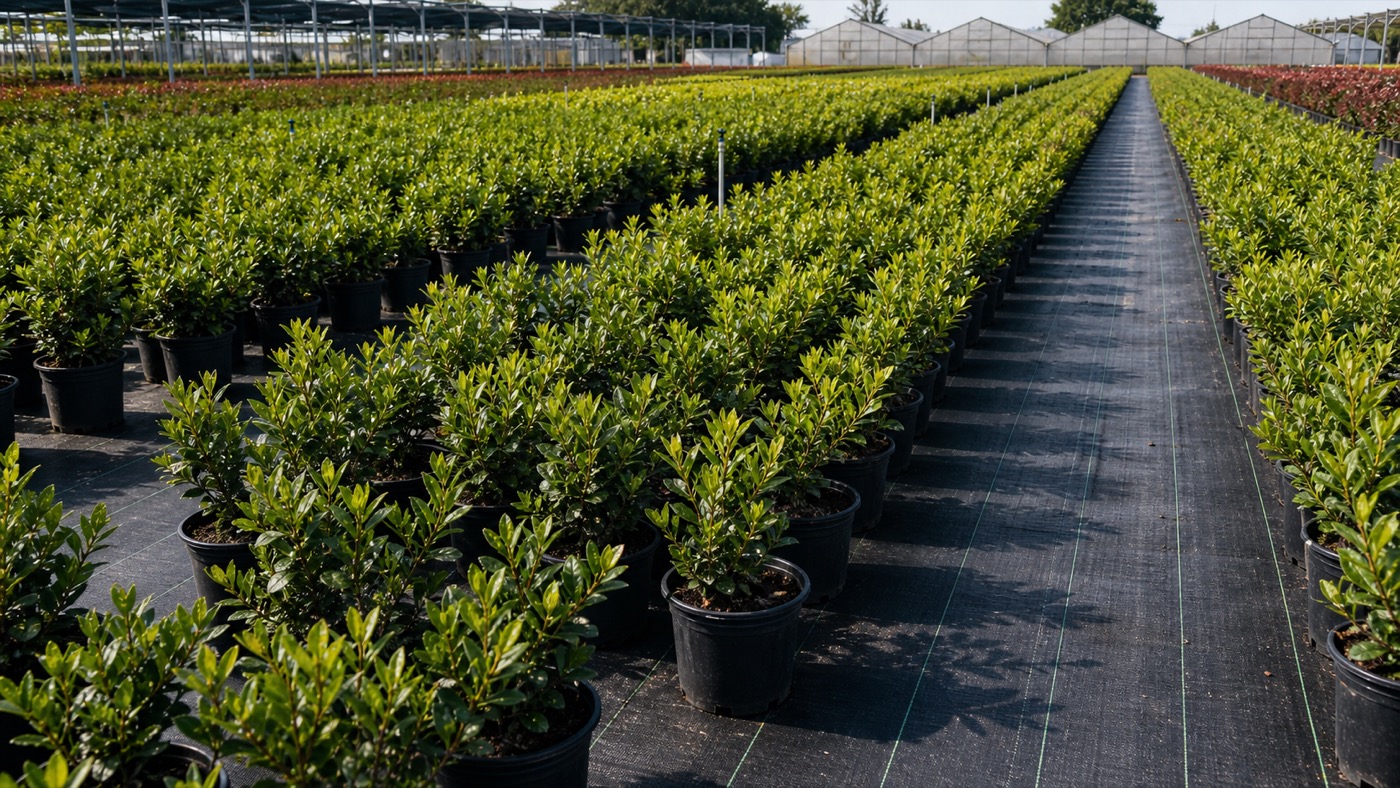
Main nursery requirements
A nursery floor should drain after irrigation, resist tearing from containers and carts, and stay flat enough for safe movement. Guide lines can help workers align pots and rows neatly.
- Water permeability
- Strong woven construction
- UV-stabilized tapes
- Clean roll edges
- Optional planting or spacing lines
PP or PE for nurseries?
PP woven ground cover is common in commercial nurseries because it offers a strong cost-to-performance balance. PE can be used when buyers need a specific feel or existing market specification. The sample should be checked under real containers.
Installation reminders
Clear sharp stones before installation, overlap seams properly and use enough staples or pegs. Poor anchoring can shorten fabric life even when the material itself is good.
Buyer checklist
| Buyer question | Why to ask it |
|---|---|
| How many years outdoors? | Sets the UV and GSM target. |
| Will carts drive over it? | May require heavier fabric and careful base preparation. |
| What pot sizes? | Affects puncture pressure and drainage needs. |
| Need guide lines? | Helps container spacing and nursery layout. |
Need a factory sample?
Tell us your nursery layout, pot size, traffic level and target outdoor life. We can suggest a suitable woven ground cover specification.
View related productFAQ
Can nursery ground cover drain water?
Most woven ground covers allow water movement through the weave, but drainage also depends on the base and installation.
Should nurseries buy the cheapest fabric?
Usually no. A failed nursery floor costs more in labor and replacement than the small saving on fabric.