How Reflective Ground Cover Works in Agriculture
Reflective ground cover is not just a white version of weed barrier. In many crop systems, it works as a simple light-management tool: the white surface reflects part of the sunlight back toward the lower leaves and fruit, while the woven fabric covers the soil to reduce weeds and keep working rows cleaner.
For buyers, the important point is practical: reflective ground cover should be selected by application, fabric construction, UV requirement, water permeability and roll size, not by color alone.
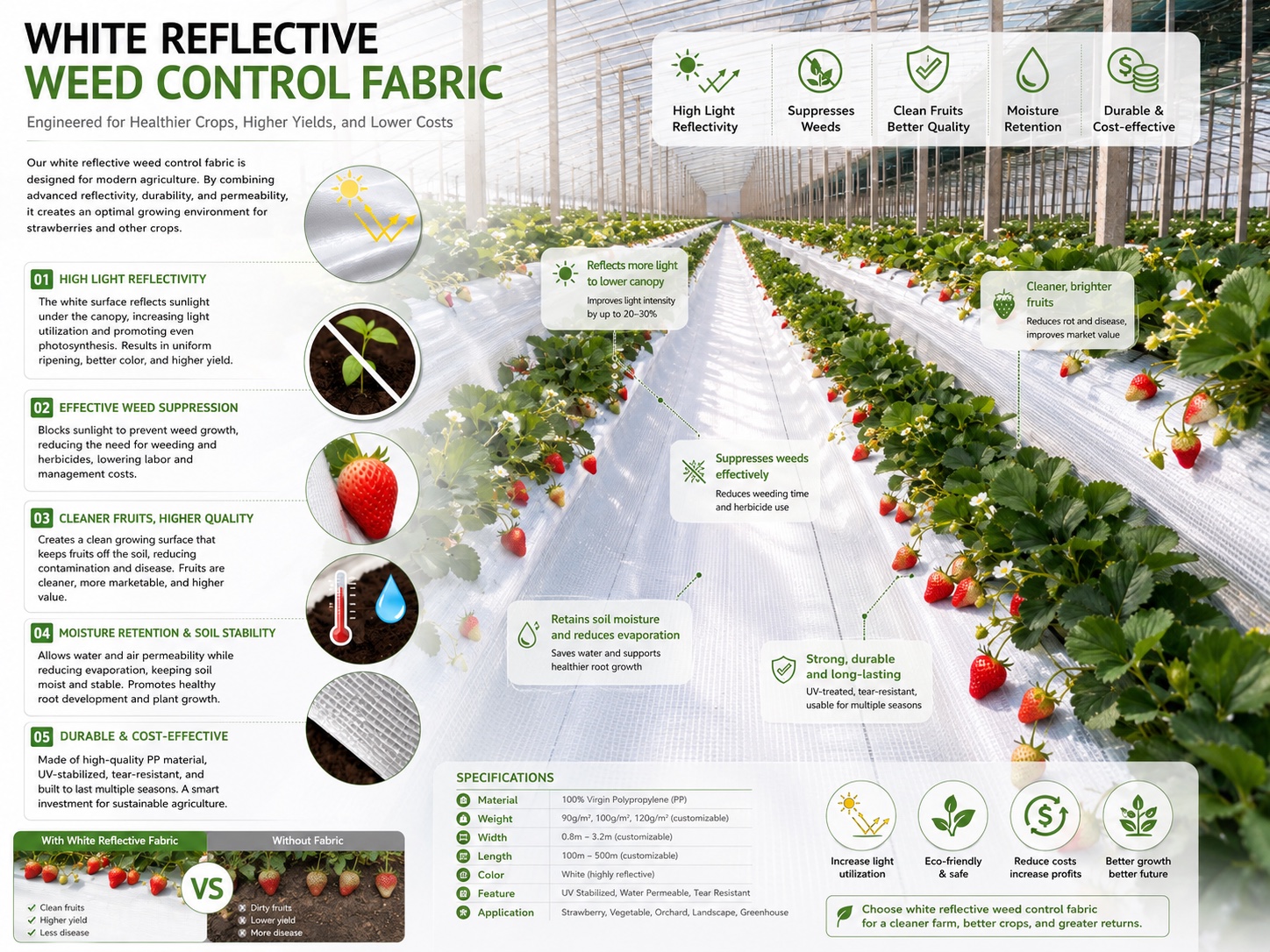
1. Light reflection: why the white surface matters
Plants receive light from above, but lower leaves and fruit are often shaded by the canopy. This is especially common in strawberries, peppers, tomatoes, nursery plants and fruit rows. A clean white reflective surface can redirect some light upward into these shaded areas.
This does not create extra sunlight. It redistributes available light. The result depends on crop height, row spacing, canopy density, greenhouse structure, season, dust on the cover and how much of the fabric remains exposed after the plants grow.
2. Weed control: why opacity still matters
Reflective ground cover also needs to block enough light from reaching the soil. If the fabric is too thin or not opaque enough, weeds may still grow through or below the cover. For this reason, buyers should check the fabric weight, weave density and real sample opacity before confirming a large order.
- White top surface: improves reflection and gives a clean visual appearance.
- Opaque body or black underside: helps reduce light reaching weeds.
- Woven construction: allows stronger handling than thin film and can support repeated use.
3. Heat effect: white is usually cooler than black
A white surface generally absorbs less solar radiation than a black surface. In warm growing seasons, this can help reduce excessive surface heating around the row. That can be useful in greenhouses, berry tunnels and outdoor crops where the soil surface becomes too hot.
But the “cooler” effect is not always good or bad by itself. In a cool climate or early season, growers may prefer warmer soil. For this reason, reflective ground cover should be matched to the crop stage and local climate.
4. Water movement: woven fabric is different from solid film
Most woven reflective PE ground covers allow some water movement through the fabric structure. This is different from solid plastic film, where water must usually enter through planting holes, drip irrigation or designed openings.
If the ground cover will be used in a greenhouse aisle, nursery floor or strawberry row, buyers should ask whether normal water permeability is enough, or whether the installation needs special drainage planning.
5. Where reflective ground cover is most useful
| Application | Why it helps | Buyer note |
|---|---|---|
| Strawberries | Reflects light around low fruit, keeps rows cleaner and helps suppress weeds. | One of the strongest applications, especially in tunnels and greenhouses. |
| Peppers and tomatoes | Brightens lower canopy areas and improves floor cleanliness. | Works best where the white surface remains visible between rows. |
| Orchards and vineyards | Can reflect light toward shaded fruit zones before harvest. | Often installed as row strips or temporary seasonal cover. |
| Nurseries and flowers | Keeps containers clean, suppresses weeds and creates a brighter working area. | Roll width and edge quality are important for neat installation. |
| Greenhouse aisles | Improves brightness and keeps workers away from mud or bare soil. | Check anti-slip handling, drainage and cleaning method. |
6. Reflective woven ground cover vs reflective mulch film
These products are sometimes confused, but they are purchased differently.
| Item | Reflective woven PE ground cover | Reflective mulch film |
|---|---|---|
| Structure | Woven plastic tape fabric | Thin blown film |
| Main specification | GSM, width, roll length, UV, weave and packing | Thickness, width, color and season life |
| Handling | Stronger, easier to remove and reuse | Lighter, usually more short-term |
| Common use | Greenhouse floors, aisles, nursery beds, row strips and reusable installations | Direct crop-bed mulch for shorter cycles |
7. What buyers should specify before ordering
When asking a manufacturer for reflective ground cover, a clear specification helps avoid misunderstanding.
- Material: PE woven reflective ground cover, white or black-and-white structure.
- Fabric weight: target GSM and tolerance.
- Width and roll length: matched to greenhouse bays, field rows or retail packaging.
- UV requirement: expected outdoor exposure and destination climate.
- Water permeability: normal woven drainage or special requirement.
- Edge finish: heat cut, hemmed edge, eyelets or custom cutting if needed.
- Packing: bulk rolls, labeled rolls, cartons, woven bags or pallet loading plan.
8. Factory quality checks that matter
- Actual GSM: cut and weigh samples from different parts of the roll.
- Reflective surface consistency: check whether the white side is clean, even and not easily damaged.
- Weave density: look for stable fabric, straight lines and no obvious weak bands.
- UV formulation: confirm the intended outdoor use and service-life expectation.
- Roll packing: check labels, wrapping, roll weight and loading plan before shipment.
Buyer conclusion
Reflective ground cover is useful because it combines two simple ideas: reflect more useful light into the crop area and cover the soil to keep rows cleaner. It is not magic, and it should not be sold as a guaranteed yield increase in every farm. But in the right crop system, especially strawberries, peppers, tomatoes, nurseries, flowers and selected orchard rows, it can be a very practical material.
Need reflective ground cover samples?
Send your crop, target GSM, width, roll length, UV requirement and packing method. HXT Plastics can help compare reflective woven PE ground cover specifications for your market.
View reflective ground coverFAQ
Does reflective ground cover increase yield?
It can support better crop conditions in some systems by improving light distribution and cleanliness, but the result depends on crop, climate, canopy, installation and management. Buyers should test samples in the real growing environment.
Is white reflective ground cover suitable for blueberries?
It may be useful in aisle or container systems, but blueberries have shallow roots and specific moisture needs. Full row coverage should be tested carefully for root-zone temperature and drainage.
Can reflective ground cover be reused?
Woven PE reflective ground cover is usually stronger than thin film and can often be reused when it is installed, cleaned and stored properly. GSM, UV stabilization and field conditions affect reuse life.