Orchard Reflective Ground Cover Guide
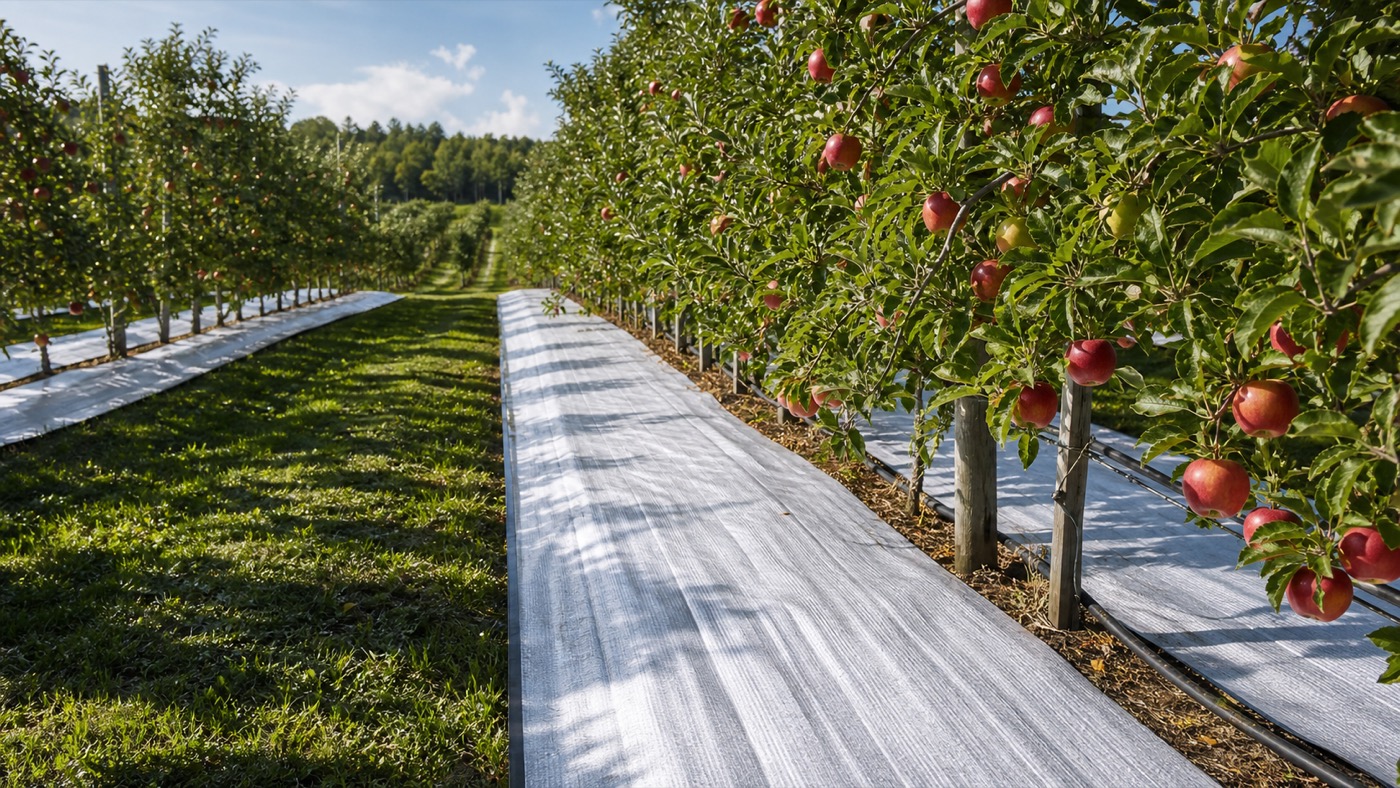
In orchards and vineyards, reflective ground cover is often used as a row strip to redirect light into the lower canopy. It can be useful for cherries, apples, grapes and other fruit where color development and light distribution matter before harvest.
The goal is not to cover the whole farm blindly. The goal is to place a reflective surface where it can actually return light to shaded fruit zones.
Why orchards use reflective cover
Fruit inside the canopy often receives less direct sunlight. Reflective strips can return light upward from the row floor, helping shaded fruit receive more useful light during key development windows.
Installation timing
Many farms install reflective cover before the coloring or ripening stage, then remove or reuse it after harvest. Timing depends on crop, labor plan and local weather.
Specification points
Outdoor UV exposure, wind anchoring, roll width, fabric strength and surface cleanliness all matter. A reflective material covered with dust or soil will not perform as well as a clean surface.
Buyer checklist
| Crop | Common reason for use |
|---|---|
| Cherries | Support cleaner rows and reflected light near fruiting zones. |
| Apples | Improve light distribution around shaded lower fruit. |
| Grapes | Brighten the canopy floor in selected vineyard systems. |
| Stone fruit | Temporary reflective strips before harvest. |
Need a factory sample?
Send your crop, row spacing, target timing and roll width. We can help match reflective PE ground cover to orchard use.
View related productFAQ
Is reflective ground cover permanent in orchards?
It can be permanent or seasonal, but many farms use it during key fruit development periods.
Does it replace pruning?
No. Canopy management and reflective cover work together; one does not fully replace the other.