WTI Above $100: What Rising Oil and Freight Costs Mean for Agricultural Plastics Buyers
What does the price of crude oil have to do with greenhouse film, ground cover or drip irrigation tape?
Crude oil has returned to triple digits. Reuters reported that West Texas Intermediate (WTI) settled at US$101.39 per barrel on September 14, while Brent settled at US$105.68. The move followed renewed concern about energy supply and shipping disruption in the Middle East.
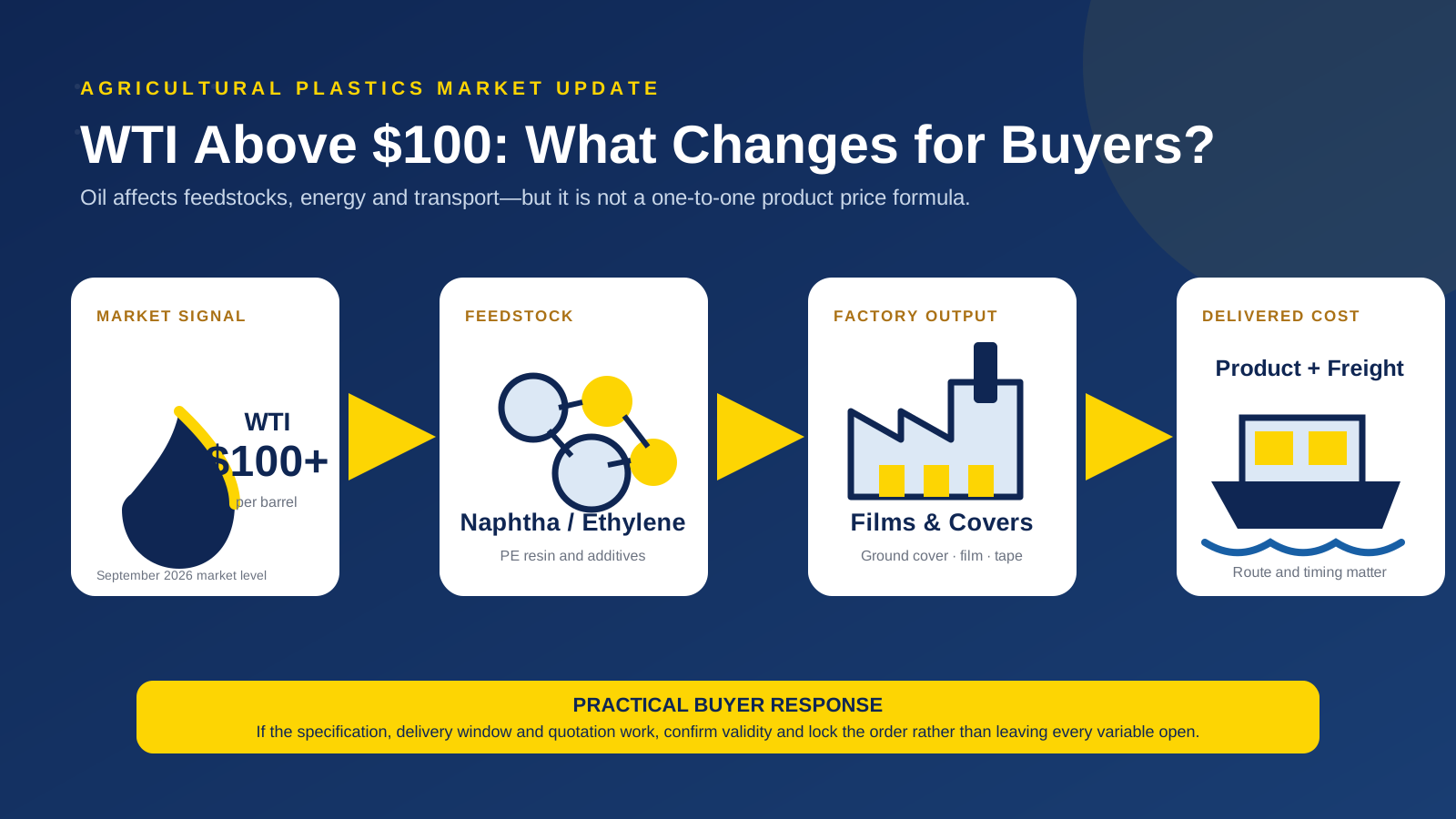
The connection is closer than it may appear. Many agricultural films, woven covers and irrigation products are made from PE or PP, while their resin feedstocks, factory energy, packaging and transport all sit within the wider oil and petrochemical supply chain. For growers, agricultural distributors and importers, the practical question is whether those changing costs can alter the delivered price of the products they buy.
Why oil prices matter to agricultural plastics
PE and PP agricultural products sit downstream from the petrochemical industry. The U.S. Energy Information Administration explains that naphtha and other oils refined from crude are used as feedstocks in petrochemical crackers that produce the building blocks for plastics. The International Energy Agency likewise identifies naphtha, LPG and ethane as major raw materials for plastics production.
This creates several channels through which an oil shock may reach a finished agricultural product:
- Feedstock: oil-derived naphtha can affect the economics of ethylene and polymer production.
- Energy: extrusion, weaving, lamination, film blowing and finishing all consume electricity or fuel.
- Additives and packaging: UV stabilizers, masterbatch, coating materials, wrapping and some packaging inputs may also face cost changes.
- Domestic transport: resin delivery, inland trucking and container movement are exposed to diesel and operating costs.
- Ocean transport: vessel fuel, route disruption, port congestion and available capacity influence freight quotations.
Why a 10% oil increase does not mean a 10% product increase
The relationship is real, but it is not a simple formula. Plastics can be produced from crude-derived feedstocks and from natural-gas-based feedstocks. Regional production economics therefore differ. Resin prices also respond to scheduled maintenance, unplanned plant outages, inventories, downstream demand and imports.
Finished products add another layer. A lightweight film, a 120 gsm woven ground cover and a laminated insulation cover do not have the same resin share, production process, packaging or container utilization. A factory may also have existing raw-material inventory that delays a price change, while a later batch may be purchased at a new market level.
That is why buyers should ask for the quotation validity period rather than assume a headline oil price mechanically determines the product price.
Ocean freight is adding a second variable
Container shipping is also under pressure, but the picture differs by route. Drewry’s September 10 assessment showed Shanghai–Los Angeles spot rates rising 2% to US$7,352 per 40-foot container and Shanghai–New York rates rising 1% to US$9,726. Drewry also noted that Middle East tensions continued to disrupt shipping through the Strait of Hormuz.
At the same time, Drewry’s broader market signal said freight remained elevated even though there had been some month-on-month easing. This distinction matters: it would be inaccurate to say that every destination and every sailing is increasing at the same speed.
| Cost variable | What may push it higher | Why the buyer’s result can differ |
|---|---|---|
| PE or PP resin | Feedstock costs, outages, low inventory and strong demand. | Regional supply, natural-gas feedstocks, factory inventory and contract timing. |
| Finished agricultural product | New resin purchases, energy, labor, additives and production capacity. | GSM, thickness, width, construction, packing and order volume. |
| Ocean freight | Fuel, route disruption, congestion, blank sailings and peak demand. | Destination, carrier, sailing date, equipment and Incoterm. |
| Delivered cost | Product and freight increases occurring together. | Container utilization, duty, local charges, exchange rate and inland delivery. |
What we have seen in current customer enquiries
Several buyers first asked us for quotations in July and, as of mid-September, have not yet confirmed their orders. This is normal: projects need approval, crop plans change, samples must be checked and customers compare suppliers.
However, the commercial conditions around those enquiries have not stood still. As raw-material purchase costs moved, we adjusted some product quotations, and freight indications also increased on relevant routes. A July quotation may therefore no longer represent the cost of producing and shipping the same goods in September.
This is an observation from our own enquiry pipeline, not a statistical claim about the whole market. It is also not a reason to rush into an unsuitable order. It simply shows that waiting is not always a neutral decision when resin, freight and production capacity are changing together.
When does locking an order make sense?
If the specification is correct, the goods are genuinely needed, the delivery window is known and the quotation is commercially acceptable, confirming within the stated validity period can be reasonable. It reduces the number of variables left open.
Reasonable to confirm
The product specification and quantity are approved, the shipment window is realistic, and the current delivered cost works for the project.
Better to wait
The crop plan, quantity, dimensions or destination is still uncertain, or the buyer would be ordering only because of a market headline.
Clarify the price lock
Ask what triggers the lock: deposit receipt, raw-material purchase, confirmed production slot or another written milestone.
Separate product and freight
Check the Incoterm and freight validity. A product price may be firm while an ocean quotation remains subject to the booking date.
Five questions to ask before confirming
- How long is the product quotation valid? Confirm the expiry date in writing.
- Does the quotation lock resin and production? Understand whether a deposit secures material, capacity, or both.
- How long is the freight valid? Ocean rates may have a shorter validity than the factory quotation.
- Which Incoterm is used? EXW, FOB, CFR and CIF expose the buyer and seller to different cost components.
- What can still change? Confirm specifications, packing, loading quantity, surcharges and the treatment of unexpected route changes.
The practical conclusion for agricultural buyers
WTI above US$100 is a signal worth watching because petroleum sits upstream of plastics, energy and transport. It is not a reason to accept an unexplained increase, and it is not proof that every quotation will rise tomorrow.
A sensible buyer response is more disciplined: finalize the correct specification, compare the delivered cost, understand how long product and freight prices are valid, and confirm when the project economics already work. Waiting for a perfect market bottom can add risk if raw materials, freight and capacity all move in the wrong direction before the order is placed.
Need an updated agricultural plastics quotation?
Send the product, specification, quantity, destination port and target shipment date. We will separate the product and freight assumptions, state the quotation validity and explain what is required to reserve production.
Request an Updated QuotationFrequently asked questions
Does a higher WTI price immediately increase PE agricultural product prices?
No. Crude oil can influence petrochemical feedstocks, energy and transport, but resin inventory, regional supply, demand and factory purchasing timing also matter. The direction may be related without the percentage change being the same.
Are all ocean freight rates rising?
No. Freight is route-specific. Some transpacific lanes increased in early September, while other routes were stable or softer. Buyers should request a current rate for their actual destination and sailing window.
Should buyers place an order only because oil is above US$100?
No. The product must first suit the application and the commercial terms must make sense. Earlier confirmation is reasonable when the requirement is real and approved—not as a speculative response to one market headline.
Sources and methodology
- Reuters report republished by Business Recorder — WTI and Brent settlements, September 15, 2026
- Drewry World Container Index assessment — September 10, 2026
- Drewry Container Shipping Market Signals
- U.S. Energy Information Administration — oil-derived and gas-derived feedstocks used to make plastics
- International Energy Agency — Global Energy Review 2026: Oil
Market note: Oil and freight prices change daily. Figures in this article are dated observations, not forecasts. HXT’s comments about July-to-September enquiries describe our own pipeline and should not be interpreted as market-wide statistics.