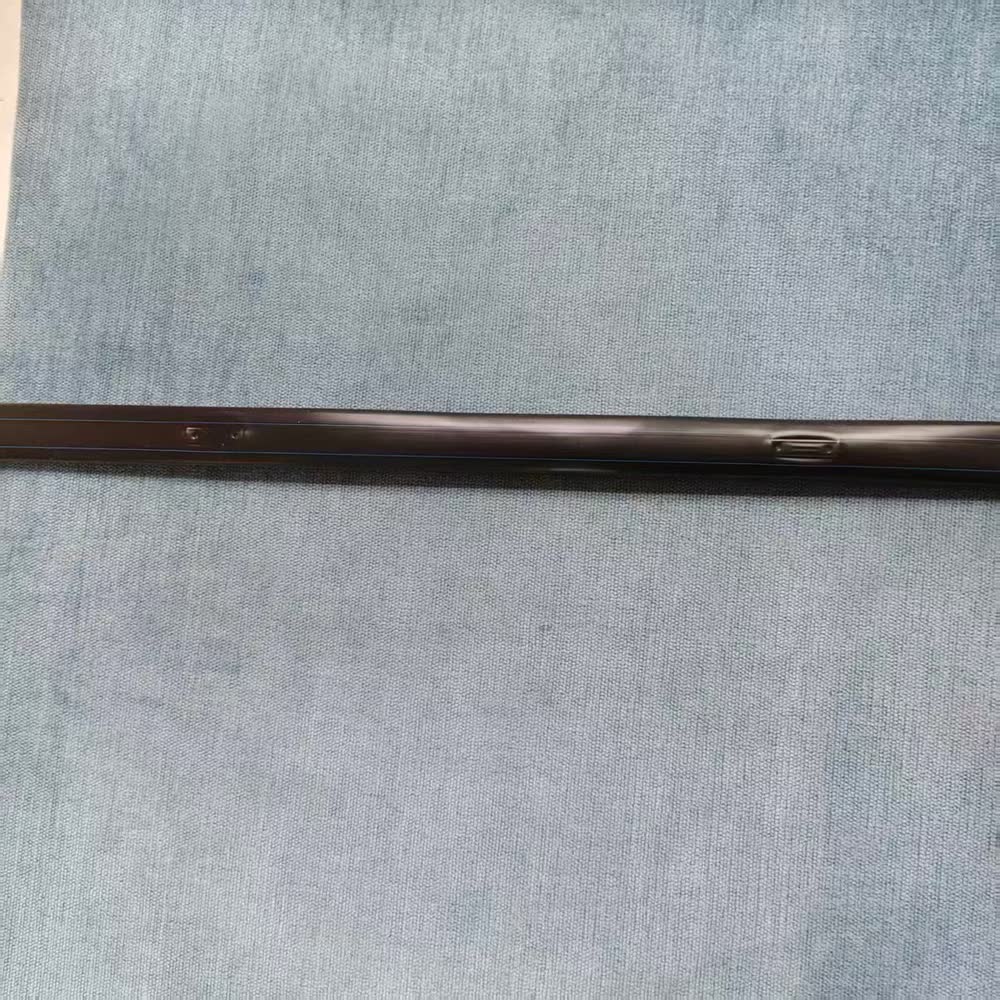
Drip Irrigation Tape & Accessories
Factory-direct HDPE inline drip tape for vegetables, grains, orchards, greenhouses and commercial row crops. We supply 16, 20 and 22 mm tape, support customized emitter spacing and roll specifications, and help buyers match compatible take-off valves, connectors, punch tools and PE mainline options.
Compare five tape and hose families
Select a product type below. The image, application and reference specifications will change in the same place, similar to choosing a variation on a marketplace product page.
Inline Patch Drip Tape
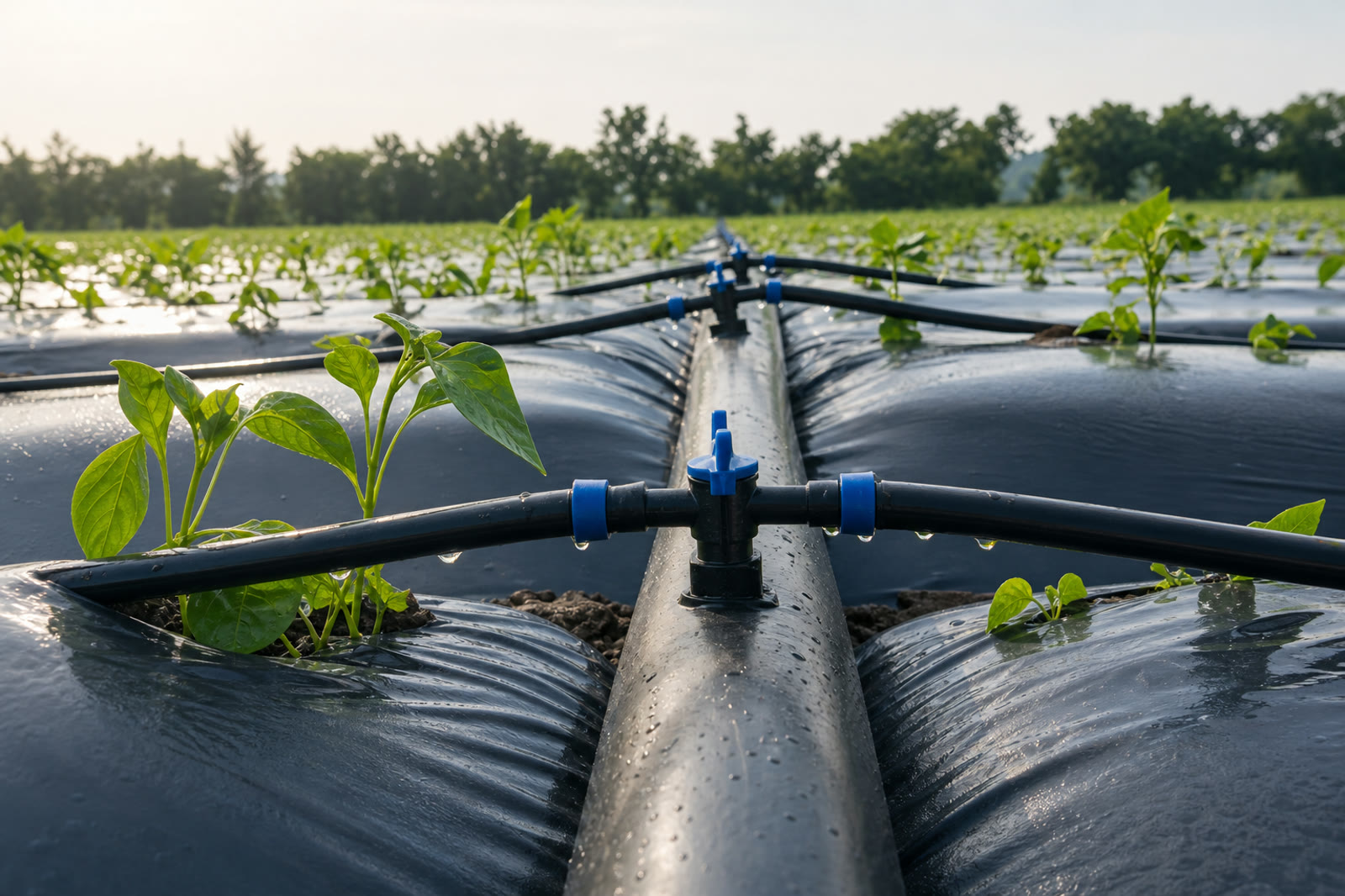
Flat HDPE tape with integrated emitters for precise water delivery beside crop rows. Suitable for vegetables, grains, greenhouse beds, orchards and commercial field projects.
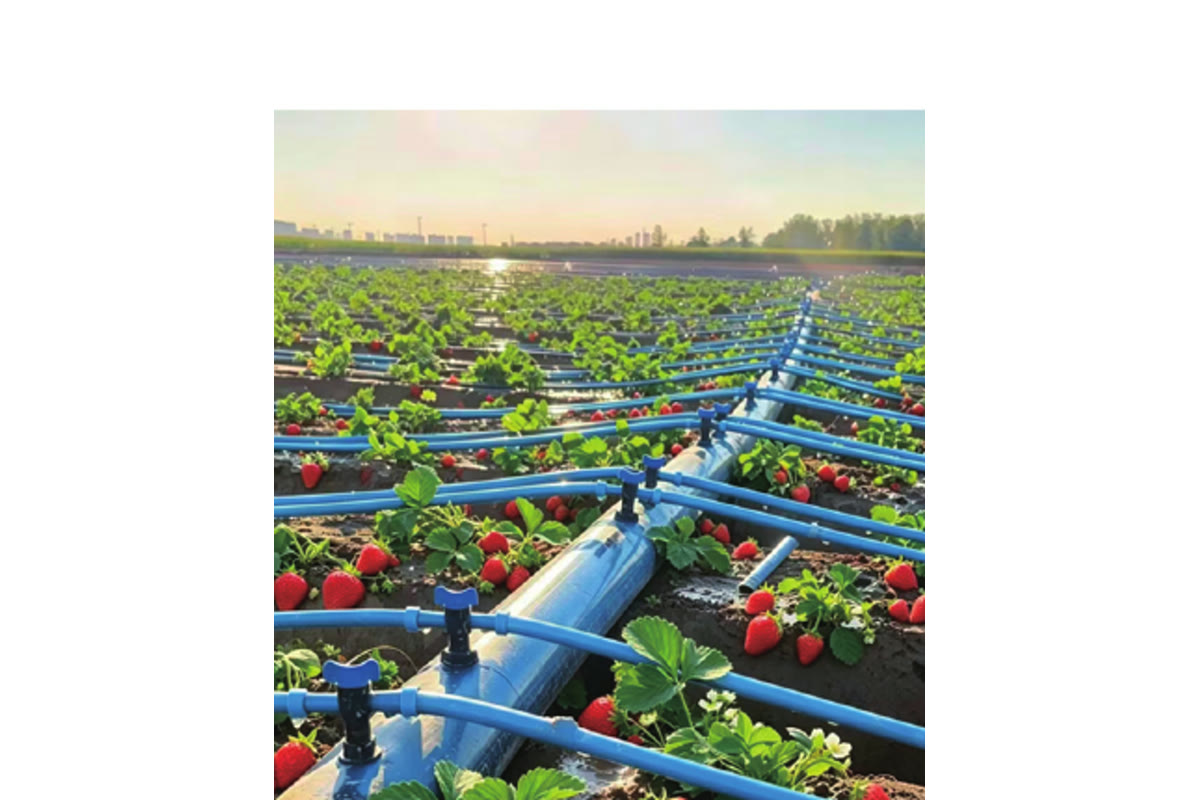
Reflective Inlaid Patch Drip Tape
A blue or silver reflective surface reduces solar heat absorption and can help lower soil-surface temperature. The reflective appearance may also reduce bird pecking around the tape. It is intended for nurseries, young crops, strawberries and strong-light production areas.
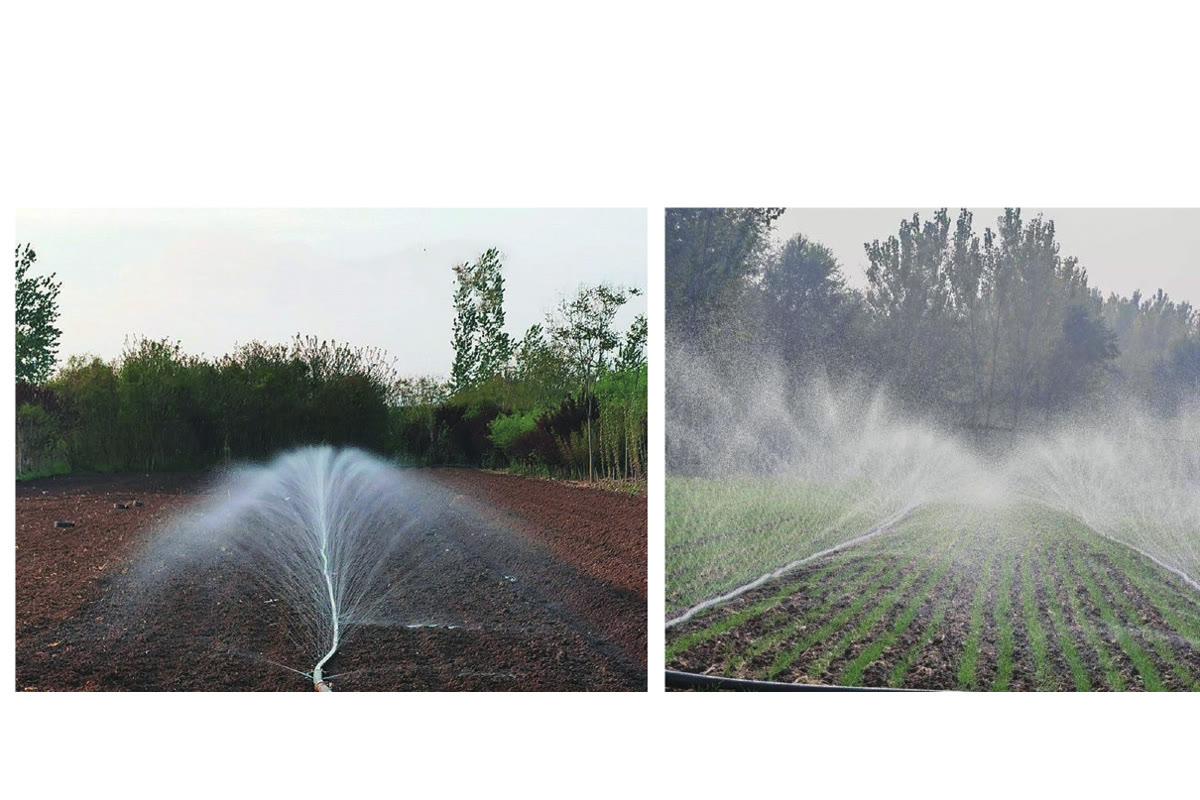
Micro-Spray Tape
Low-pressure spray tape for broad, fine-droplet irrigation. It can cover a wider strip than drip tape and is useful for closely spaced crops, seedling fields and large-area watering where localized emitters are not required.
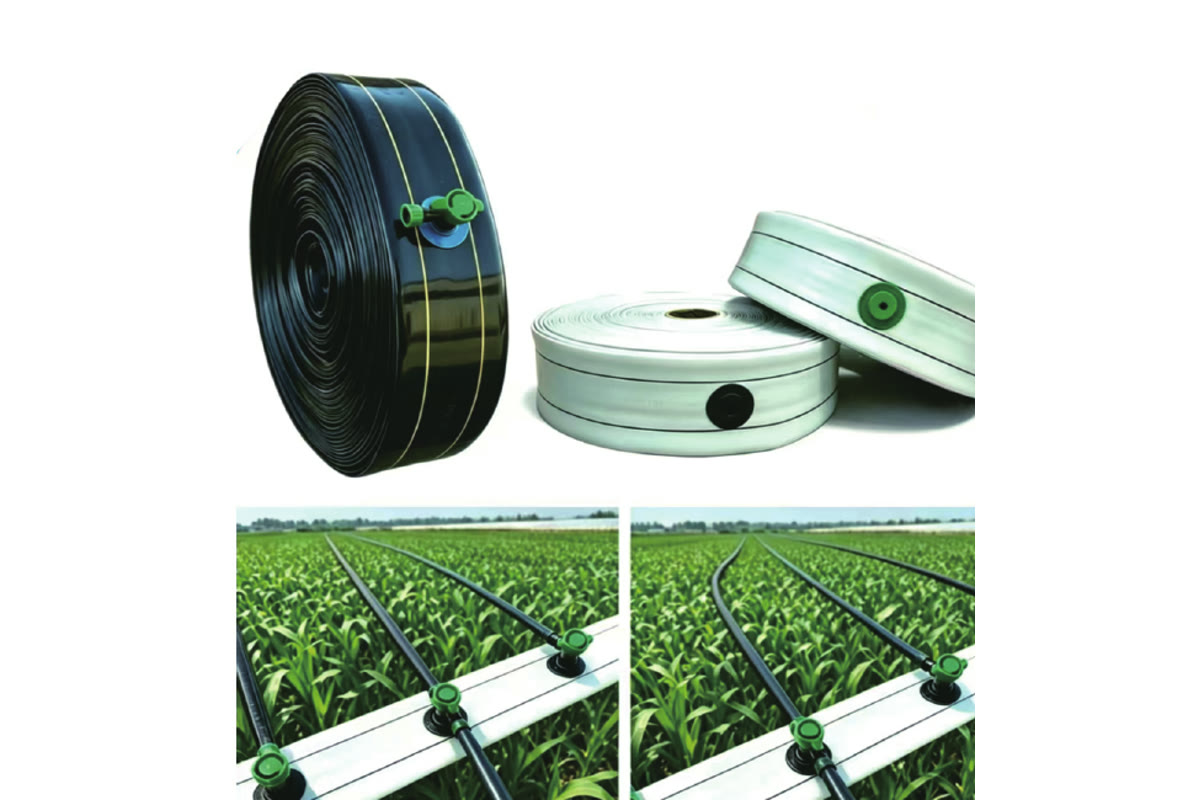
PE Pre-Perforated Water Hose
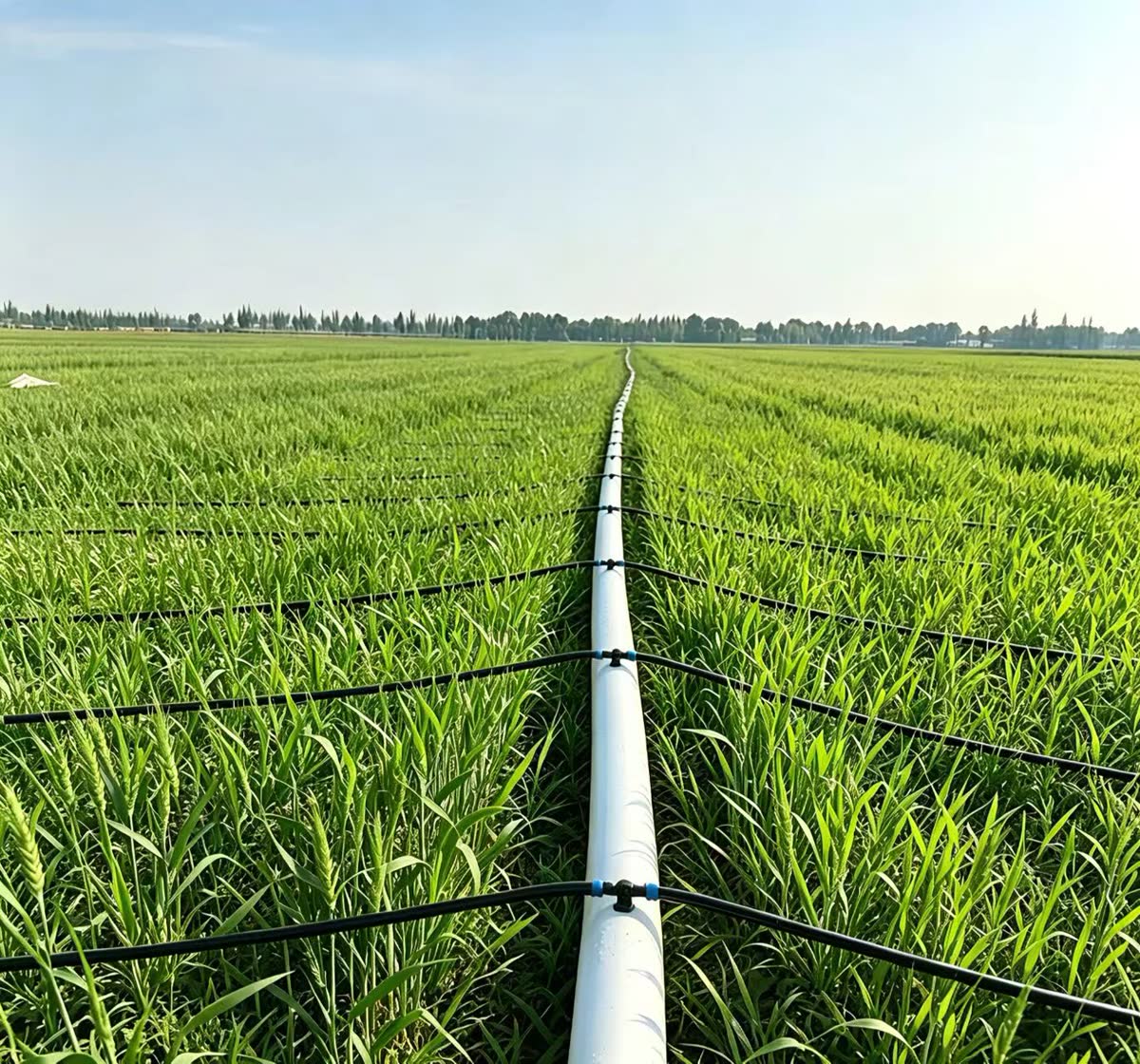
The outlet holes are prepared before shipment, reducing on-site punching and installation time. It works as a field header that connects quickly to drip tape or other lateral irrigation equipment.
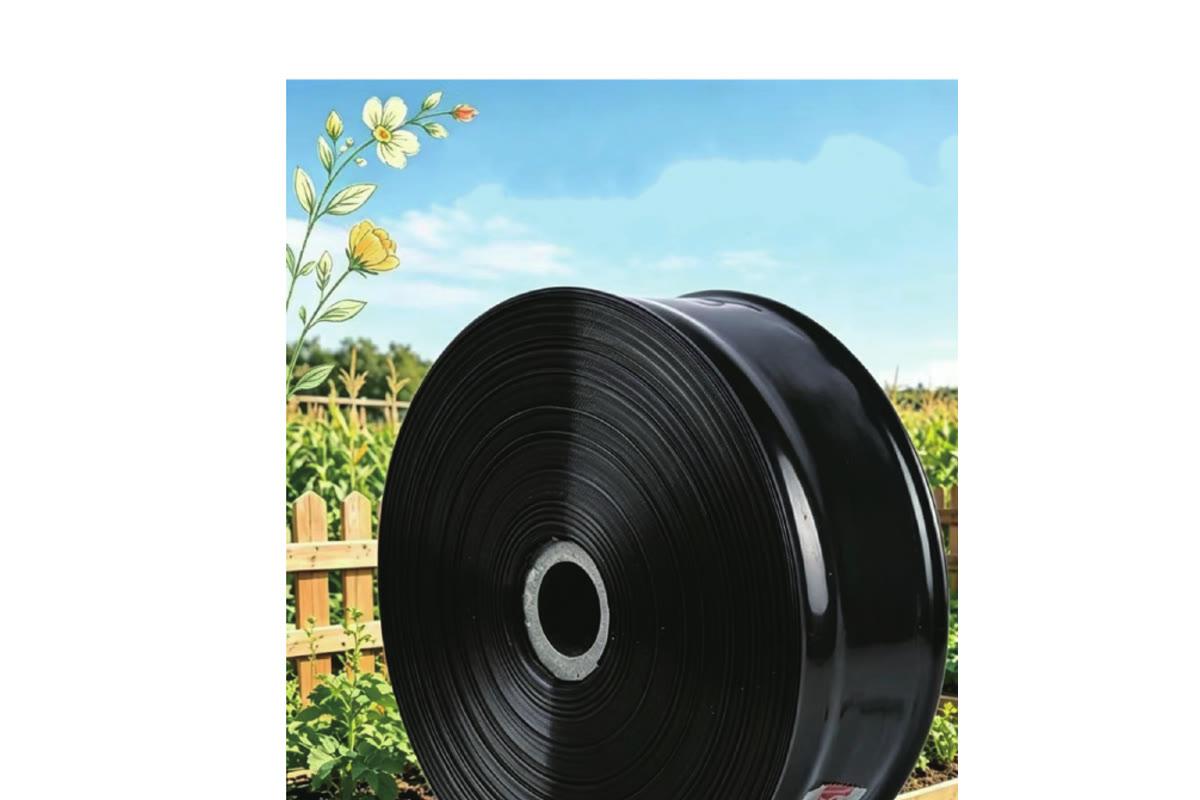
PE Double-Layer Composite Mainline Hose
A lightweight and flexible black PE hose for carrying water across the field. It can be combined with valves, branch fittings and drip laterals to form the main distribution network.
One inquiry for tape, fittings and field connection
Drip tape performs best when the tape diameter, emitter flow, spacing, filtration, pressure and field length are considered together. Our product page is organized around that complete buying decision.
Uniform low-flow delivery
Integrated patch emitters use a controlled flow path to distribute water close to the crop row while reducing surface evaporation and unnecessary wetting between rows.
Flexible specification
Choose 16, 20 or 22 mm tape, then confirm emitter spacing, flow, wall thickness and coil length for the crop, soil, field run and installation method.
Practical anti-clog design
Integrated emitters are designed for stable flow and clog resistance. Correct filtration, pressure control and routine flushing remain essential parts of the system.
Compatible accessories
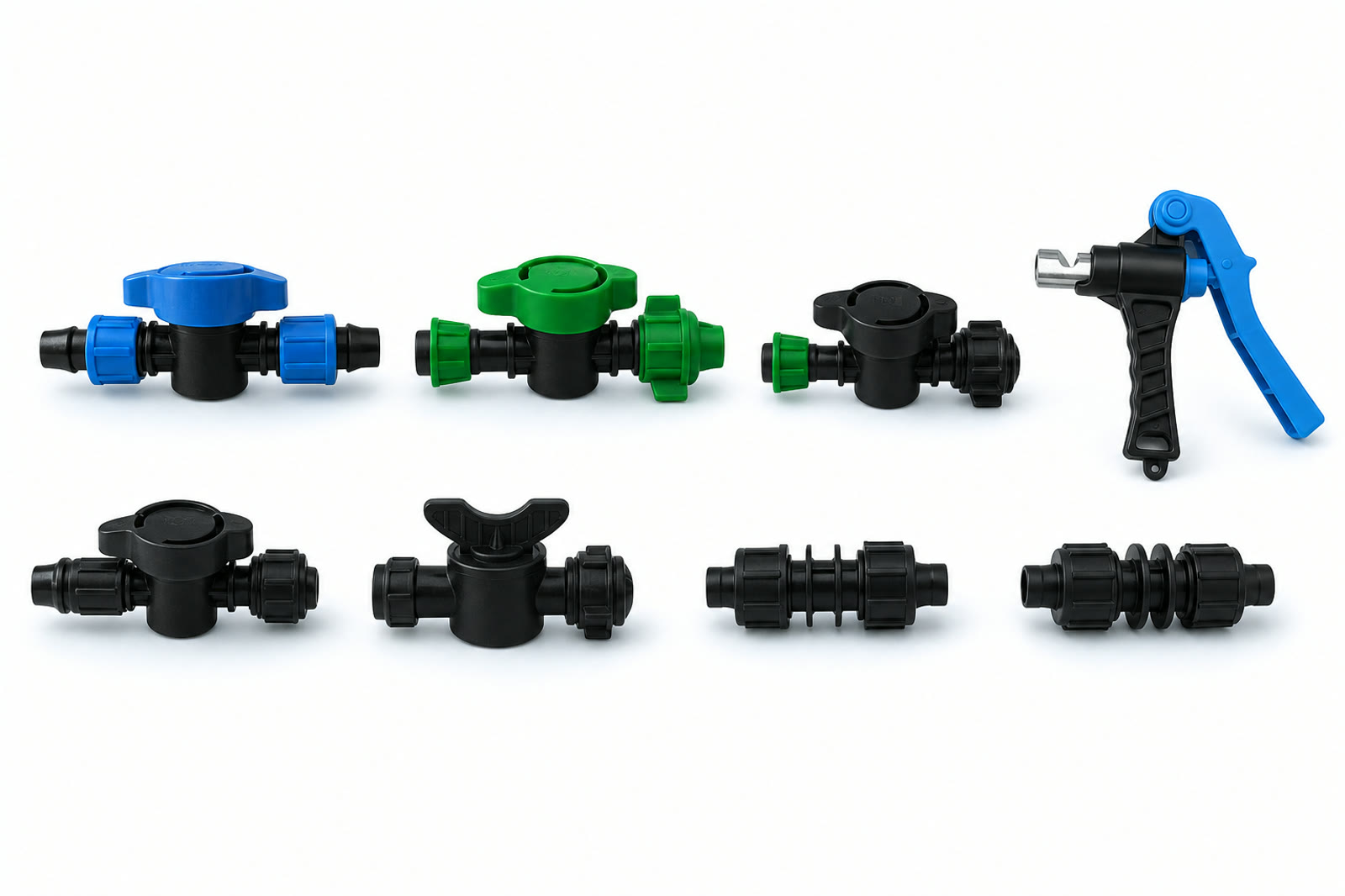
Take-off valves, lock-nut connectors, joiners, tees, elbows, punch tools and header-hose fittings can be selected together to simplify project purchasing.
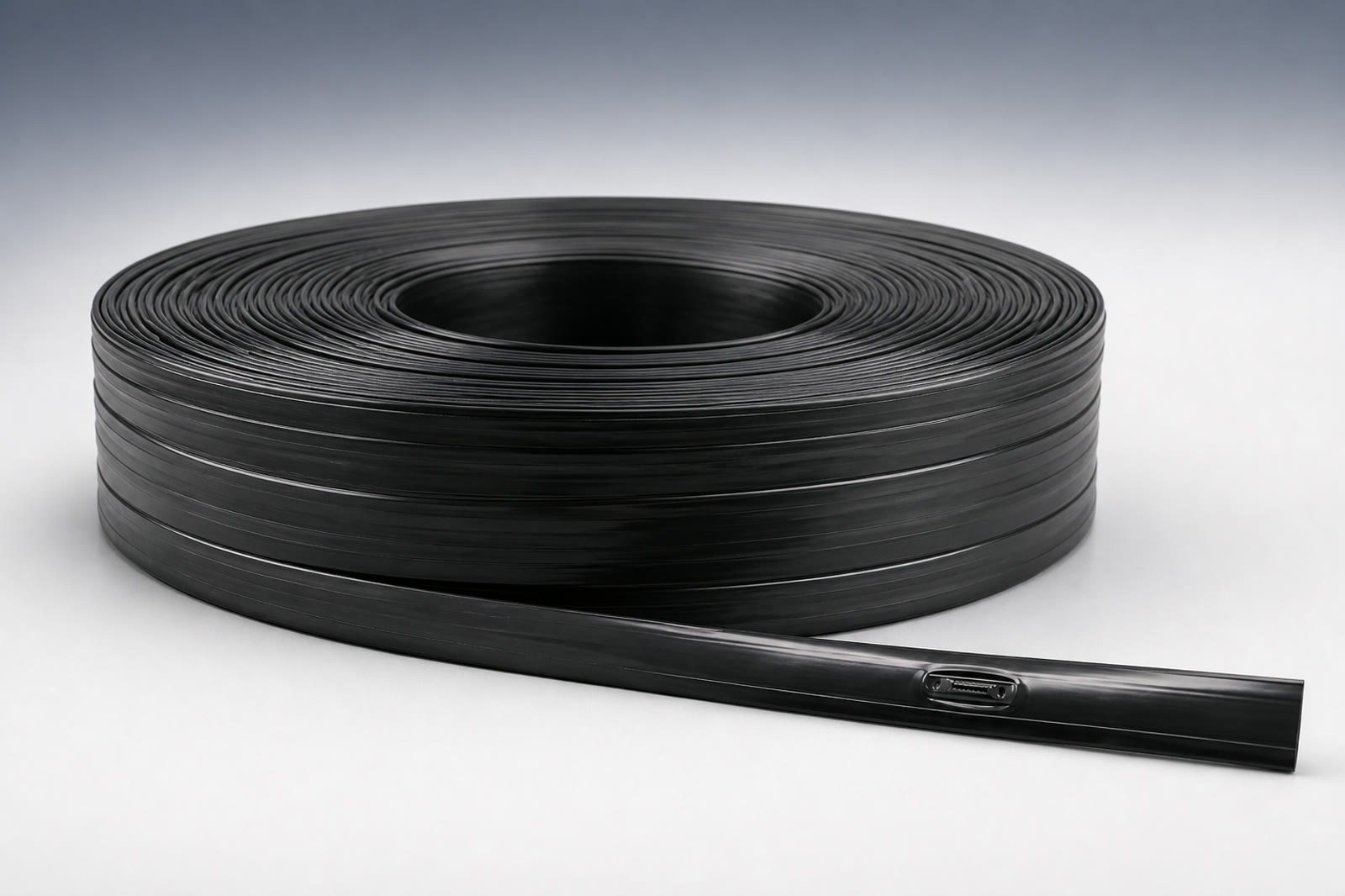
Flat HDPE tape with integrated patch emitters
The collapsible tape is easy to coil, ship and lay beside crop rows. Integrated emitters create a defined water path inside the tape and discharge water at regular intervals. Available configurations can be matched for seasonal row crops, greenhouse beds, orchards and large open-field projects.
16, 20 and 22 mm diameters
16 mm is a common starting point for shorter and medium lateral runs. Larger diameters may be considered when field length and required flow increase. Final run length must be checked against pressure loss and elevation.
Spacing and flow options
Standard project options include 15, 20, 25 and 30 cm emitter spacing. Approximate emitter flow options range from 0.4 to 1.38 L/h, depending on model and test pressure.
Custom wall and coil
Wall thickness from approximately 0.14 to 0.30 mm and roll lengths from 500 to 3000 m can be discussed. Packaging and private-label requirements are confirmed before production.
Common options for project matching
These ranges summarize available configurations. They are not a fixed model sheet: final performance depends on the selected emitter, operating pressure, water quality, terrain and lateral length.
| Item | Available reference | What the buyer should confirm |
|---|---|---|
| Product type | Inline patch drip irrigation tape | Surface or shallow subsurface use; crop and season |
| Material | HDPE, black | UV package and intended use cycle |
| Nominal diameter | 16 mm, 20 mm, 22 mm; customization supported | Field run length, total zone flow and fittings |
| Emitter spacing | 15, 20, 25 or 30 cm; custom spacing available | Plant spacing, soil wetting pattern and crop row |
| Emitter flow | Approx. 0.4–1.38 L/h per emitter, model dependent | Operating pressure and required discharge uniformity |
| Wall thickness | Approx. 0.14–0.30 mm; customizable | Season length, handling, retrieval and installation depth |
| Roll length | Approx. 500–3000 m; customizable | Row length, installation equipment and pallet plan |
| Accessories | Valves, connectors, joiners, tees, elbows, punch tools | Tape diameter and header/mainline connection size |
Accessory families available with the tape
We select a practical accessory set around the chosen tape and header hose rather than asking buyers to identify every small fitting alone.
Take-off valves
Connect drip tape laterals to a PE or layflat header and allow row-by-row flow control.
Joiners & end fittings
Lock-nut couplings, straight connectors and end closures for installation and repair.
Tees & elbows
Threaded or hose-compatible branch fittings for field routing and zone organization.
Punch tools
Hand punch options create consistent connection holes in PE or layflat header hose.
How the components work together
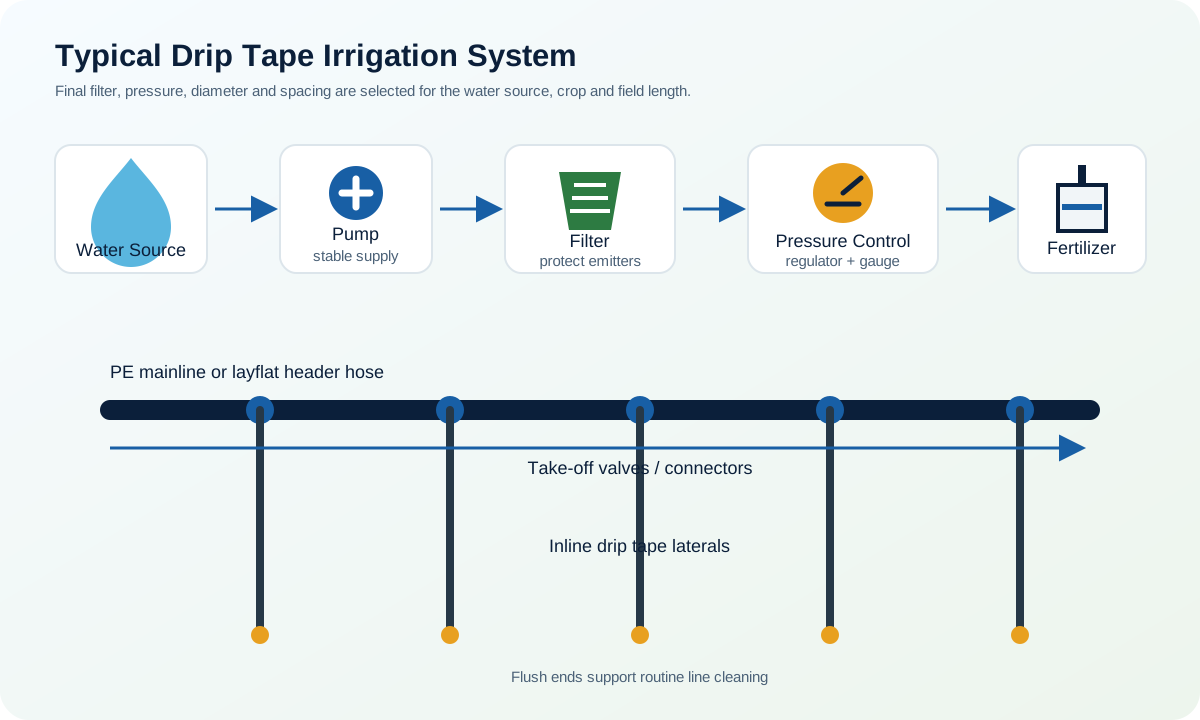
A typical project runs from the water source through pumping, filtration and pressure control into the mainline, take-off valves and drip tape laterals. Flush ends support routine line cleaning.
See the integrated emitter inside the tape
This close-up shows the flat tape profile and the integrated emitter section. The internal flow path is what meters discharge along the row. For reliable operation, the system still needs suitable filtration, controlled pressure and end-of-line flushing.
Before ordering
- Crop and row spacing: determines lateral layout and emitter spacing.
- Soil type: affects how quickly water spreads sideways and downward.
- Water source: determines filtration and maintenance needs.
- Field dimensions: affects tape diameter, zone size and mainline layout.
During operation
- Use the specified filter and check it routinely.
- Control pressure before water enters the tape laterals.
- Flush mainlines and tape ends on a planned schedule.
- Inspect connectors and repair leaks before they affect uniformity.
Useful answers before you request a quote
Which drip tape diameter should I choose: 16, 20 or 22 mm?
The choice depends on lateral length, emitter flow and spacing, zone flow, elevation and acceptable pressure variation. Send your field drawing or row length rather than choosing only by diameter.
Can emitter spacing and roll length be customized?
Yes. Common spacing options are 15, 20, 25 and 30 cm, and roll length can be discussed within the production range. Customization should be confirmed together with diameter, thickness and flow.
Do you supply fittings with the drip tape?
Yes. We can match take-off valves, joiners, lock-nut connectors, tees, elbows, punch tools and selected PE mainline or pre-perforated header-hose options.
Why are filtration and pressure control important?
Drip emitters use narrow water passages. Filtration helps prevent particles from blocking them, while pressure control protects the tape and supports more uniform discharge along the lateral.
Can you provide OEM packaging?
Yes. Coil length, pallet plan, neutral packing and private-label requirements can be confirmed for importer, distributor and agricultural-supply programs.
Tell us about your field
We do not publish a one-size-fits-all price because diameter, thickness, spacing, flow, coil length, fittings and order volume change the configuration. Share the basics and we will prepare a matched proposal.