Black vs. Reflective Silver Drip Tape: Color, Wall Thickness and Custom Options
For most agricultural irrigation projects, black drip tape remains the practical reference point. It is familiar to installers, straightforward to specify and widely used across open fields and greenhouse crops. Reflective silver tape is a more specific option: it is chosen when a project needs a reflective surface, not simply because a brighter roll looks more technical.
Color matters, but it is not the decision that makes water distribution uniform. Wall thickness, emitter design, spacing, flow, diameter, operating pressure and filtration still determine whether a system performs as intended. A good buyer treats color as one line in the specification—not the specification itself.

Color has a role—but it does not replace irrigation design
Drip tape is a hydraulic product. Usable run length and uniformity depend on the relationship between tape diameter, emitter discharge, spacing, inlet pressure, elevation and allowable pressure loss. No surface color can correct a poor match between these variables.
For this reason, a quotation request should not stop at “black or silver.” It should state the crop, soil, lateral length, water source, filtration method and the number of rows that will operate in one zone.
Black drip tape: the common field configuration
Black is the mainstream option for standard drip tape projects. It is suitable for many vegetable, grain, orchard and greenhouse layouts when the rest of the specification has been designed correctly. Its practical strength is not that it is universally best, but that it is a familiar, economical and straightforward baseline for buyers and installers.
For a black tape project, the questions should remain concrete: What emitter spacing is needed? What flow is available? How long is each lateral? Does the wall need to withstand one season, repeated handling or a more demanding installation environment?
Reflective silver tape: specify the field purpose
Reflective silver or silver-surface tape is a project-specific option for growers who want a reflective surface around the crop row. It is often considered in strong-light production areas and for sensitive crops, including some strawberry and nursery systems. The expected benefit must be defined before the product is selected: surface-light management, heat considerations, crop practice or a local market preference are different reasons and should not be treated as one universal claim.
A silver appearance alone does not establish wall strength, emitter uniformity, UV package, pressure range or service life. Request the exact construction and test data of the selected model.
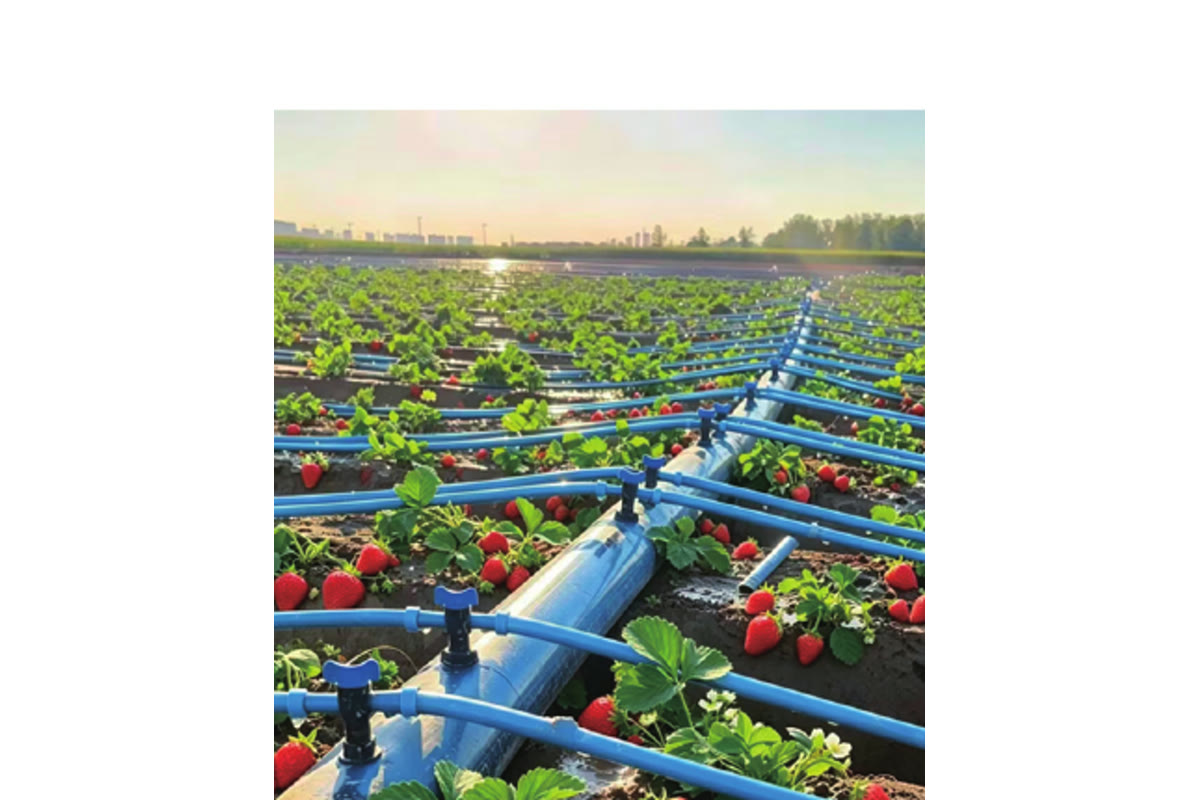
A reflective surface is one part of a field system; crop conditions and hydraulic design still set the final specification.
Wall thickness answers a different question: how much physical risk?
Wall thickness mainly affects handling, puncture resistance, cost and the level of physical risk a tape can tolerate. A lighter wall can be appropriate for a carefully managed seasonal application. A heavier wall may be justified when the line will face more installation stress, stones, machinery, retrieval or multiple-season handling.
Thickness alone does not guarantee a longer useful result. Water quality, filtration, pressure management and flushing also affect how long a tape can remain functional. Define intended service and field risk first, then select an appropriate wall range with the supplier.
| What to compare | Why it matters | What to place on the RFQ |
|---|---|---|
| Surface color | Black is the general-purpose mainstream choice; reflective silver is selected for a defined project purpose. | Black or reflective silver; describe crop, climate and installation intent. |
| Wall thickness | Influences handling resistance, cost and expected level of physical risk. | Required wall range and number of seasons or handling cycles expected. |
| Emitter spacing & flow | Controls wetting pattern and total zone flow. | Crop geometry, soil texture, spacing and target flow at stated pressure. |
| Diameter | Influences pressure loss and fitting compatibility over the required run length. | 16, 20 or 22 mm, plus lateral length and elevation. |
| Filtration & pressure | Protects emitter passages and supports consistent discharge. | Water source, filter plan, inlet pressure and flushing method. |
Custom colors: an OEM option, not a substitute for performance
Custom color can be useful where a distributor needs product identification, a private-label program requires a visual difference or an established market uses a particular appearance. HXT has also supplied a yellow-transparent tape configuration for an overseas OEM project. This type of customization can be discussed, but it is not presented as a mainstream alternative to black or reflective silver tape.
When a buyer requests a non-standard color, the discussion must still confirm resin and additive requirements, wall thickness, emitter type, spacing, flow, roll length, printing, packaging and the test conditions used for approval. A color sample alone is not a production specification.
Questions buyers should ask before approving a sample
- What crop, soil and irrigation method is this tape designed around?
- What are the nominal diameter, wall thickness, emitter spacing and emitter flow at the stated pressure?
- What lateral length and elevation are assumed in the recommended layout?
- Which filter, regulator, take-off valve and end closure are compatible?
- Is the selected color standard, reflective or a custom OEM requirement?
- What sample, packing, coil length and private-label checks are required before production?
A restrained conclusion
Black and reflective silver drip tape do not compete on color alone. They are choices inside a larger irrigation design. Black remains the reliable mainstream configuration. Reflective silver should be chosen for a clear project need. Custom colors are possible, but the purchase decision should remain anchored in wall thickness, emitter performance, pressure, filtration and real field conditions.
Need a black, reflective or OEM drip tape specification?
HXT supplies 16, 20 and 22 mm drip tape with configurable wall thickness, emitter spacing, roll length and compatible fittings. Share the crop, soil, field layout and water conditions so the configuration can be reviewed before production.
View Drip Tape & Fittings