How to Keep a Greenhouse Warm in Winter: A Practical PE Insulation Quilt Guide
Winter greenhouse growing is not only about adding more heat. The first job is to slow heat loss after sunset. A well-managed cover system keeps the warmth collected during the day inside the greenhouse longer, reduces cold wind exposure and helps crops face a more stable night climate.
For many vegetable, flower and nursery growers, an external roll-up greenhouse insulation quilt is one of the most practical tools in that system. The greenhouse film admits light in the daytime; the quilt is closed after sunset to add an insulating outer layer.
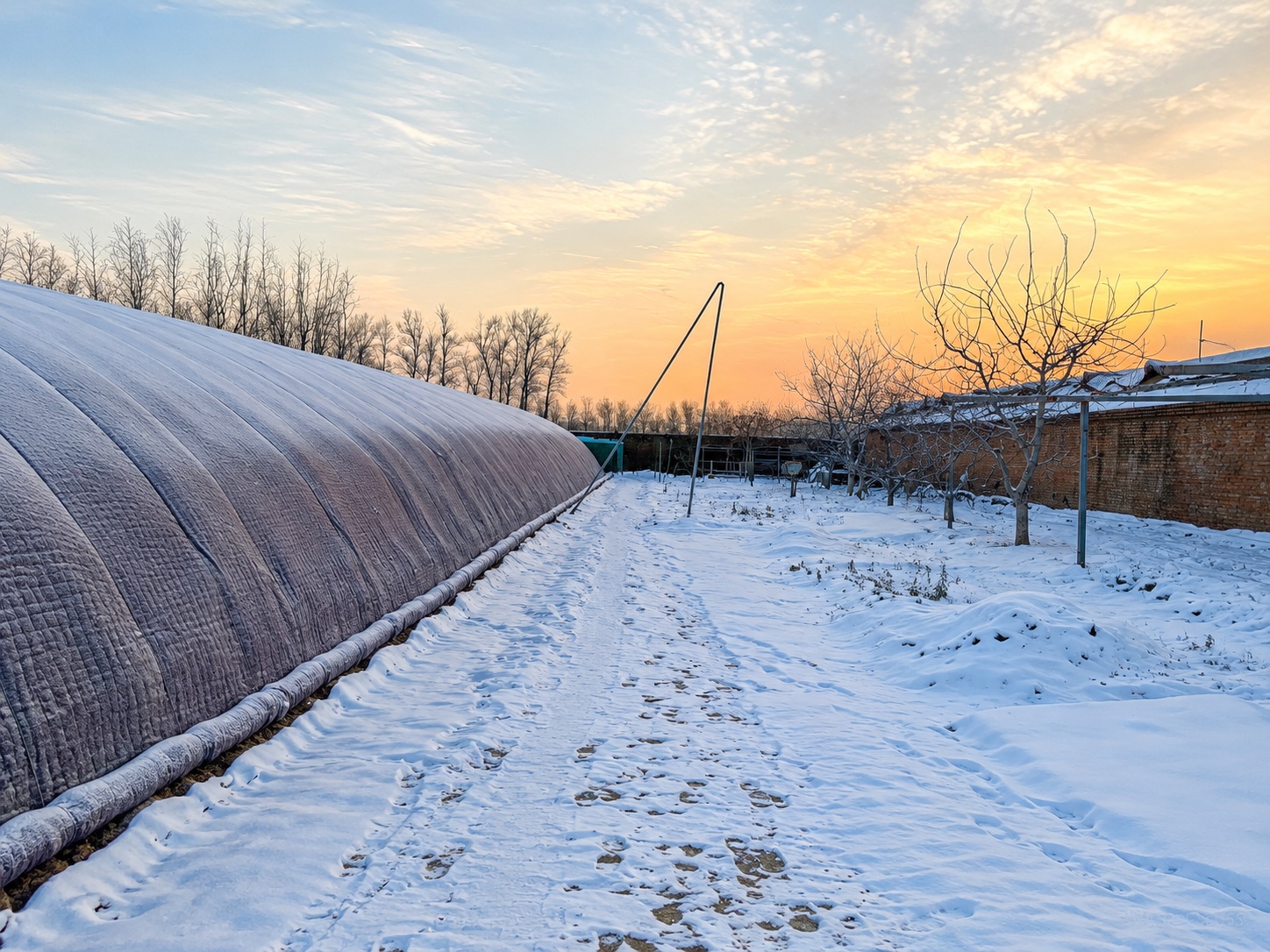
A winter greenhouse protected by an external insulation quilt in snow and frost conditions.
Why does a greenhouse lose heat so quickly in winter?
During the day, sunlight warms the greenhouse air, soil, crops and structure. After sunset, heat moves out through the cover and escapes through openings around doors, vents, sidewalls and imperfect overlaps. Wind makes this faster by carrying cold air across the outer film and through small gaps.
Greenhouse film provides daylight transmission and basic weather protection. In cold weather, a single layer of film may not be enough. An external insulation quilt creates an additional roof covering that slows the transfer of heat from the greenhouse to cold outdoor air.
1. A suitable PE insulation quilt helps manage rain, snow and moisture
The outer layer of a greenhouse insulation quilt needs to protect its core from rain, snow, frost and condensation. A PE woven shell can be made water-resistant or waterproof for outdoor use, helping reduce the risk of moisture reaching the insulation core during repeated roll-up operation.
A wet core becomes heavier, more difficult to roll and less effective at insulation. Buyers should therefore review not only weight, but also the PE outer shell, surface treatment, seams, edges and drainage arrangement for the local climate.
2. It blocks wind and adds protection for the greenhouse film
When closed at night, the quilt reduces direct cold-wind exposure on the greenhouse film and adds an outer layer against frost, rain, snow and dust. It can help keep the cover system more stable during the cold season.
This does not replace correct film tension, frame design or storm anchoring. A loose cover can still move and rub in strong wind, so guides, end fixing and roll-up alignment should be checked before winter begins.
3. Keep warmth at night without blocking daylight
The key advantage of a roll-up system is timing. Open the quilt in the morning so the greenhouse receives daylight; close it before the temperature drops sharply at night. This preserves daytime solar gain while adding insulation when it is needed most.
Reducing heat loss before relying on heating can lower the supplemental energy needed by the greenhouse. Actual results depend on the structure, crop, wind, outside temperature, ventilation management and heating system.
4. Make temperature and humidity management more controllable
Large overnight temperature changes can add stress to crops. An insulation quilt does not replace good ventilation, irrigation or dehumidification, but it can slow rapid cooling and create a more stable starting point for daily management. When conditions improve, open the quilt and ventilate according to the crop requirement.
Winter preparation checklist
- Check that greenhouse film is tensioned and that damage, overlaps and door openings are sealed.
- Confirm that the roll-up unit, guides and end fixing operate smoothly without the quilt drifting or collecting water.
- Match the PE outer shell, seams and insulation core to local wind, rain, snow and minimum temperature.
- Plan morning opening and evening closing times around weather and crop growth stage.
- Use the quilt together with suitable ventilation, humidity control and heating where required.
How to choose the right greenhouse insulation quilt
Do not choose only by thickness or price per square meter. A useful purchasing brief should include greenhouse span, roof length, frame shape, local minimum temperature, rainfall or snow conditions, wind exposure, crop type, desired opening method and whether the quilt will be manually or automatically rolled.
- Outer layer: PE woven shell for weather protection, tear resistance and roll-up handling.
- Thermal core: industrial synthetic fiber cotton or another specified insulation layer suited to the target climate.
- Finished width: matched to the greenhouse roof and overlap requirement; HXT offers custom 2–8 m widths.
- Edges and seams: reinforced where necessary for the winding shaft, guide ropes and repeated operation.
- System compatibility: confirmed with the roll-up mechanism, side guides and greenhouse frame before production.
Need a winter greenhouse insulation solution?
Send us your greenhouse dimensions, location, roll-up method and target specifications. We can help confirm a suitable PE shell and insulation-core combination for your project.
View Greenhouse Insulation Quilt